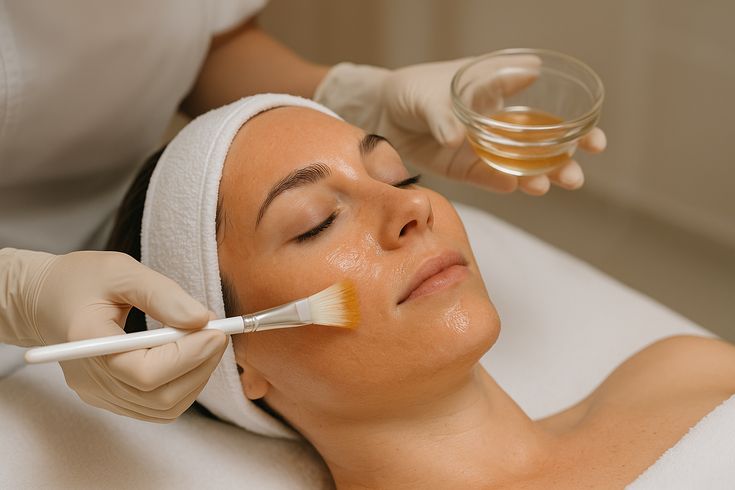
When your skin appears dull, worn out, or unbalanced, neither makeup nor moisturizer can give it back that radiant look. For people who need genuine improvement in skin color and texture, chemical peels are among the most reliable and dermatologist-recommended treatments of today.
A chemical peel does its job by thoroughly exfoliating the skin, activating new skin cells to regenerate fresh, healthier ones. When applied appropriately, it can resurface rough texture, reduce acne scars, and enhance the radiance of your face—without surgery or recovery time for most individuals.
Let’s dive into how it’s done, what to anticipate, and why it’s a gold-standard in cosmetic dermatology.
What Is a Chemical Peel?
A chemical peel is a medical treatment that employs a chemical solution (usually alpha-hydroxy acids or beta-hydroxy acids) to strip the outermost layers of the skin. This action stimulates the body’s natural healing process, which stimulates new collagen growth and cell turnover, resulting in smoother, brighter, and more even-toned skin.
Chemical peels are divided according to depth:
Superficial Peels – Apply mild acids such as glycolic or lactic acid. Ideal for light exfoliation and radiant skin with no recovery time.
Medium Peels – Tend to use trichloroacetic acid (TCA). Helpful for acne scars, hyperpigmentation, and early wrinkles.
Deep Peels – Usually employ phenol. Strong and more recovery time is needed but provide extreme improvement for deep scars or wrinkles.
Each peel type is chosen depending on the condition, desired outcome, and tolerance of your skin.
What Skin Conditions Can Chemical Peels Resolve?
Chemical peels are ideal for addressing a variety of common skin issues, such as:
Acne and acne scars
Uneven skin texture and complexion
Fine lines and wrinkles
Dark spots, melasma, and sun spots
Dull, lackluster skin
Large pores
As per the American Academy of Dermatology, chemical peels are beneficial for acne treatment and enhancing pigmentation disorders when used by experts.
How Do Chemical Peels Work?
The peeling solution’s acids penetrate into the skin and dissolve the dead or damaged skin cell bonds. When these outer layers peel, new skin is visible below. This also triggers fibroblasts—the collagen- and elastin-producing cells—causing the skin to look firmer and smoother in the long term.
Used as part of a treatment regimen, chemical peels enhance:
Cell rejuvenation
Skin elasticity
Hydration retention
Uniformity of pigment
Peels work particularly well when paired with other treatments like microneedling, PRP, or medical-grade facials.
What to Expect During and After a Chemical Peel
During the Procedure:
Your skin is thoroughly cleansed.
The chemical solution is applied and left on your skin for a couple of minutes.
You might experience a slight tingling or warming sensation.
The solution is neutralized and wiped off.
After the Procedure:
You can experience redness or tightness like a mild sunburn.
Light peeling or flaking can start 2–3 days after treatment and persist for up to a week.
Gentle moisturizer and sunscreen are key to healing.
Sun avoidance and abrasive skin products should be avoided for a few days.
Most superficial peels have very little downtime, and medium or deep peels might take 7–14 days of recovery.
Who Should Avoid Chemical Peels?
Though chemical peels are generally safe and effective, they might not be right for everyone. Don’t get a chemical peel if you:
Have an active skin infection, eczema, or rosacea
Are pregnant or nursing (certain acids are not advised)
Have taken isotretinoin (Accutane) within the last 6 months
Have a history of unusual scarring or keloids
Always seek out an experienced dermatologist to assess your skin type, medical history, and appropriate peel type for you.
How Frequently Should You Have a Chemical Peel?
For optimal results:
Light peels: 3–4 weeks
Medium peels: 3–6 months
Deep peels: typically just once, with results lasting for years
Your dermatologist will develop a personal treatment schedule depending on your objectives and skin reaction.
Conclusion
Chemical peels are a time-tested, dermatologist-approved treatment to address skin texture, pigmentation, and premature aging. Whether you’re struggling with acne scars, dark spots, or just want brighter, healthier skin, chemical peels offer a safe and effective path to renewal.
For those considering chemical peel treatments, consulting an expert is essential for safe and personalized care. Dr. Amit Ambade, a board-certified dermatologist, offers advanced aesthetic and medical dermatology services tailored to individual skin types and concerns. Practicing at his clinic in Malwadi, Punawale, Pimpri-Chinchwad, Pune, Maharashtra, Dr. Ambade combines clinical experience with the latest dermatological technology to help patients achieve smoother, clearer, and healthier skin through scientifically proven treatments like chemical peels.